Understanding Malware and Its Various Types
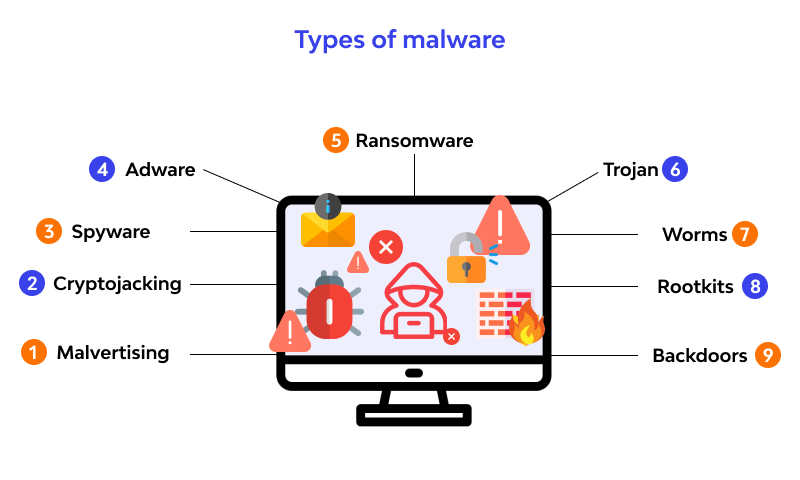
Malware, or malicious software, is a collective term for software designed to harm, exploit, or otherwise compromise a computer system or network. Each type of malware has unique characteristics and attack methods. Here’s a closer look at some common types of malware:
1. Viruses
A virus is a type of malware that attaches itself to legitimate programs or files and spreads when these infected files are shared. Viruses can corrupt, delete, or manipulate data on a system.
- Impact: Data loss, system crashes, and reduced performance.
- Protection: Use reputable antivirus software, keep systems updated, and avoid opening suspicious files.
2. Worms
Unlike viruses, worms do not need to attach themselves to a host file to spread. They replicate independently and spread across networks, often causing widespread damage.
- Impact: Network congestion, data theft, and system instability.
- Protection: Implement network segmentation, monitor network traffic, and maintain updated security patches.
3. Ransomware
Ransomware encrypts data on a victim’s device and demands a ransom for its decryption. This type of malware can cause significant financial and data loss for individuals and organizations.
- Impact: Data encryption, potential data loss, and financial impact from ransom demands.
- Protection: Regularly back up data, use endpoint protection, and train employees on phishing awareness.
4. Spyware
Spyware secretly monitors user activity and collects information without permission. This data can include passwords, browsing habits, and other sensitive information.
- Impact: Loss of privacy, data theft, and unauthorized access to sensitive information.
- Protection: Use anti-spyware tools, avoid suspicious downloads, and control permissions for applications.
Strategies for Comprehensive Malware Protection
To protect against different types of malware, organizations and individuals should adopt a multi-layered security approach:
- Regular Software Updates: Keep operating systems, software, and security tools updated to protect against vulnerabilities.
- Firewalls and Intrusion Detection Systems: Use firewalls to block unauthorized access and monitor for unusual activity.
- Employee Training and Awareness: Educate employees about common malware tactics, such as phishing, to prevent accidental infections.
- Data Backup and Recovery Plans: Regularly back up important data to avoid loss in case of a ransomware attack or other malware incidents.
By understanding the different types of malware and implementing proactive protection strategies, you can significantly reduce the risk of malware infections and safeguard your digital assets.